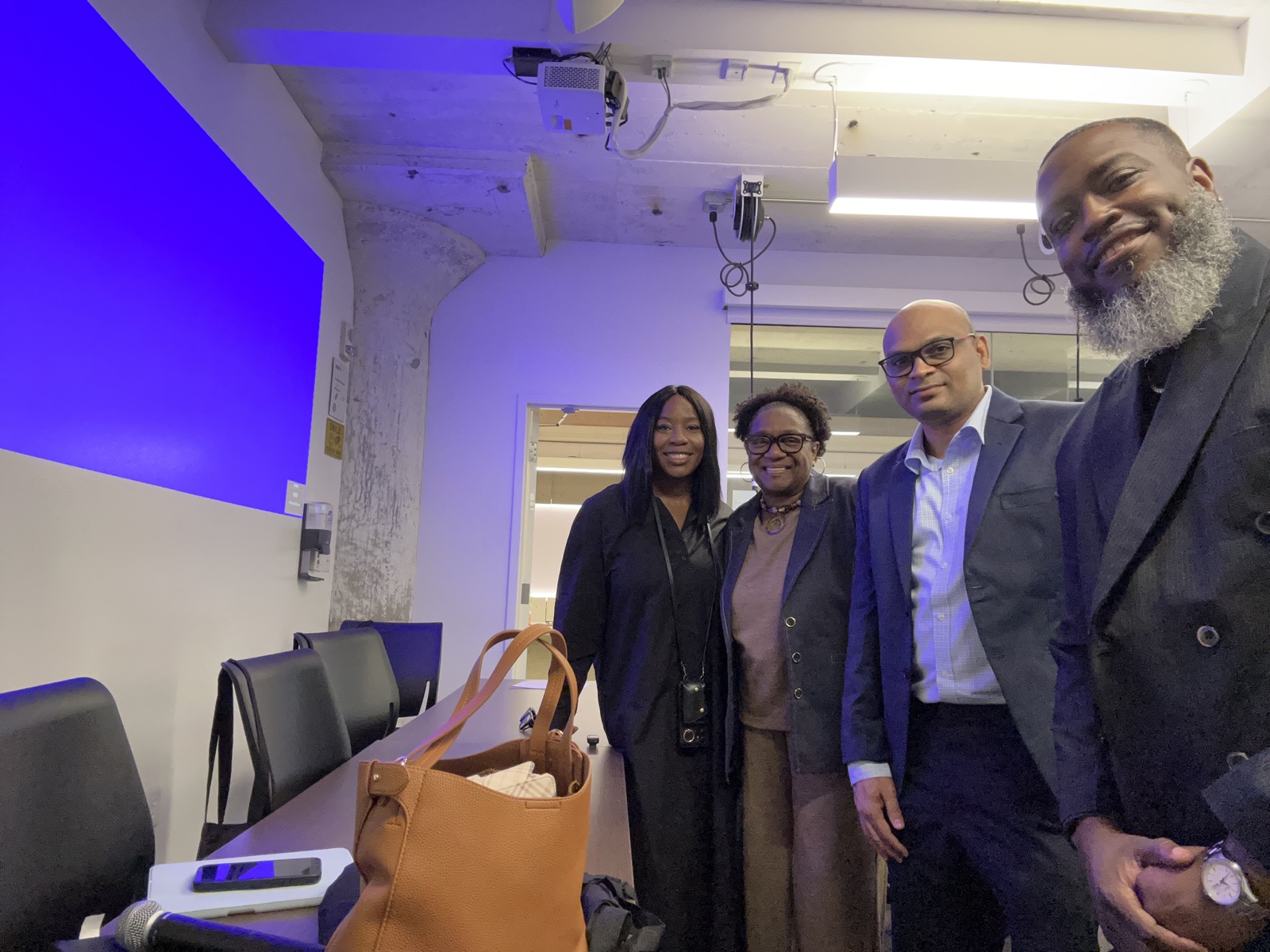
On July 10, 2026, I joined a room full of creators, entrepreneurs, educators, technologists, and community members at STAC Summit 2026 for a conversation titled AI & The Creator Economy: Tool or Threat?
The session took place at Tech901in Memphis's Crosstown Concourse and was moderated by Jen R. Prudhome Booker, interim president and chief marketing officer of Memphis Brand. I shared the panel with Sherita Douglas, founder and AI business strategist at Douglas Strategic Advisory, and Dr. Srikanth Thudumu, director of AI at the Institute of Applied Artificial Intelligence and Robotics.
That mix of experience mattered. We were not approaching artificial intelligence from one industry, one profession, or one definition of progress. We were looking at it through creativity, entrepreneurship, education, community impact, business strategy, and technical consequence. That is exactly how conversations about AI should happen.
Healthy skepticism is not resistance to innovation. It is how communities make sure innovation remains accountable to people.
The Real Question Is Bigger Than “Tool or Threat?”
“Tool or threat?” is a powerful way to open a conversation because it names the tension many creators are already feeling. AI can help someone generate ideas, organize a campaign, edit content, analyze an audience, or overcome a technical barrier. The same technology can also be used to imitate a voice, reproduce a visual style, spread misinformation, or extract value from creative work without meaningful consent.
Both realities can be true. The future of AI will not be determined by the technology alone. It will be shaped by the rules, incentives, education, values, and choices surrounding it.
That is why communities cannot afford to leave this discussion only to software companies or technical experts. The people whose work, culture, businesses, classrooms, and livelihoods will be affected must also be present when we decide what responsible use looks like.
Healthy Skepticism Deserves Respect
During the session, I engaged with participants who were not interested in accepting AI simply because it is new. They wanted to know whether creators should use it, how they should use it, and where responsible boundaries belong.
Those questions are not evidence that people are behind. They are evidence that people are paying attention.
Creators have legitimate concerns about authorship, copyright, consent, compensation, bias, originality, and the possibility that speed could be valued more than craft. Educators have questions about learning and critical thinking. Entrepreneurs want to understand efficiency without exposing their intellectual property or customer data. Communities want to know who benefits, who bears the risk, and who might be excluded.
We should not dismiss those concerns with hype. We should use them to design better policies, better training, and better tools. Skepticism becomes productive when people have access to accurate information, practical examples, and space to ask difficult questions without being made to feel afraid of the future.
Will AI Replace Creators?
Participants asked me directly whether I believe AI will replace creators. My ultimate answer was no—but that answer needs a caveat.
AI will not replace human creativity. But creators who understand how to integrate AI responsibly will be better prepared than those who refuse to understand it at all.
Creativity is more than producing an output. It includes taste, memory, intention, cultural context, lived experience, emotional intelligence, relationships, and the ability to decide why something should exist. A model can generate options. It cannot inherit a community's history, accept responsibility for an artistic decision, or build trust with an audience in the way a person can.
That does not mean creators can ignore AI. The technology is already entering music, film, design, marketing, education, publishing, gaming, logistics, healthcare, and professional services. Learning about it is not the same as surrendering to it. AI literacy gives creators the power to choose where a tool belongs, where it does not, and what safeguards must be present.
Responsible Integration Requires More Than Prompting
Responsible AI use is not simply knowing which platform can generate the fastest result. For creators and creative organizations, it means building a practice around several commitments:
- Protect consent and ownership. Understand what material is being uploaded, how a platform may use it, and whether collaborators have agreed to that use.
- Keep human judgment in the process. Treat AI output as material to evaluate, not an unquestionable final answer.
- Verify before publishing. AI systems can produce confident errors, invented sources, biased assumptions, and misleading images. The creator remains responsible for what reaches the public.
- Be transparent when context requires it. Audiences, clients, students, and collaborators deserve clarity when AI materially shapes a work or decision.
- Use AI to extend human capacity, not erase human value.The goal should be greater access, stronger work, and more time for meaningful decisions—not removing people simply because automation is possible.
As I have written before, organizations often need translators more than engineers. They need people who can connect the capabilities of AI to the realities of a classroom, studio, nonprofit, small business, or workforce program. That translation is where responsible adoption begins. Read more in AI Consulting in Memphis.
Different Voices Must Be at the Table
AI touches sectors differently. A producer may be thinking about voice cloning and music rights. A small-business owner may be thinking about marketing and efficiency. An educator may be thinking about assessment, access, and student development. A technologist may be thinking about performance, data, and safety. A young creator may simply be asking whether there will still be a place for their talent.
None of those perspectives is complete by itself. Put them together, and we begin to see the full system.
Representation in AI conversations is not ceremonial. It affects which problems get prioritized, which harms are noticed, which opportunities receive investment, and whose definition of innovation becomes the default. If only the people building technology shape the conversation, we will miss the experience of the people expected to live and work with it.
Community Education Is Economic Preparation
Conversations like the one at STAC Summit are necessary because AI is beginning to touch nearly every sector. The public should not have to wait until a job changes, a policy is enacted, or a harmful use occurs before receiving clear information.
Bringing community together creates a shared language. It gives people a chance to distinguish practical capability from marketing hype. It allows workers to identify new skills, organizations to recognize risks, and creators to make informed choices about their craft and businesses.
This is workforce development, digital literacy, entrepreneurship, and community resilience happening at the same table. Memphis has an opportunity to prepare people for the changing AI landscape in a way that reflects our own strengths: creativity, culture, logistics, education, entrepreneurship, and relationships.
The Future Should Be Built With Us
I left STAC Summit encouraged—not because every concern was resolved, but because the room was willing to hold opportunity and risk at the same time. That is the maturity this moment requires.
We do not need unquestioning enthusiasm about AI, and we do not need fear that prevents us from learning. We need informed participation. We need creators who understand their rights and their tools. We need technical experts who can communicate beyond technical circles. We need business leaders, educators, young people, policymakers, and community advocates shaping the standards together.
AI is already changing the creator economy. The question now is whether creators and communities will merely react to that change—or help direct it.